


Many landscaping projects in the Wairarapa start with good intentions. Homeowners picture a finished garden, a tidy outdoor area, or a space for entertaining. Yet a large number of these projects end up underperforming within a few years.
The reason is rarely poor workmanship alone. More often, it comes down to early planning decisions that were overlooked or misunderstood. Landscaping success in the Wairarapa is shaped long before the first plant goes into the ground.
Starting With the Look Instead of the Use
One of the most common mistakes is designing for appearance before function.
Homeowners often focus on how a landscape should look rather than how it will be used. Seating areas are placed where they photograph well, not where people naturally gather. Lawns are added without considering foot traffic or shade. Gardens are designed for visual balance rather than practical access.
When daily use is ignored, outdoor spaces quickly feel awkward or underused. A successful landscape starts by understanding how the space will support real life, not just how it will appear on completion.
The Size of the Project
Landscaping is often seen as a finishing touch rather than a construction process. This leads to unrealistic expectations around time, budget, and complexity.
In the Wairarapa, properties often include larger sections, lifestyle blocks, or mixed-use outdoor areas. These spaces require careful coordination of drainage, access, planting, and structure. Treating them as small cosmetic projects usually results in rushed decisions and compromised outcomes.
Proper planning recognises landscaping as a staged process, not a weekend task.
Ignoring How the Land Behaves
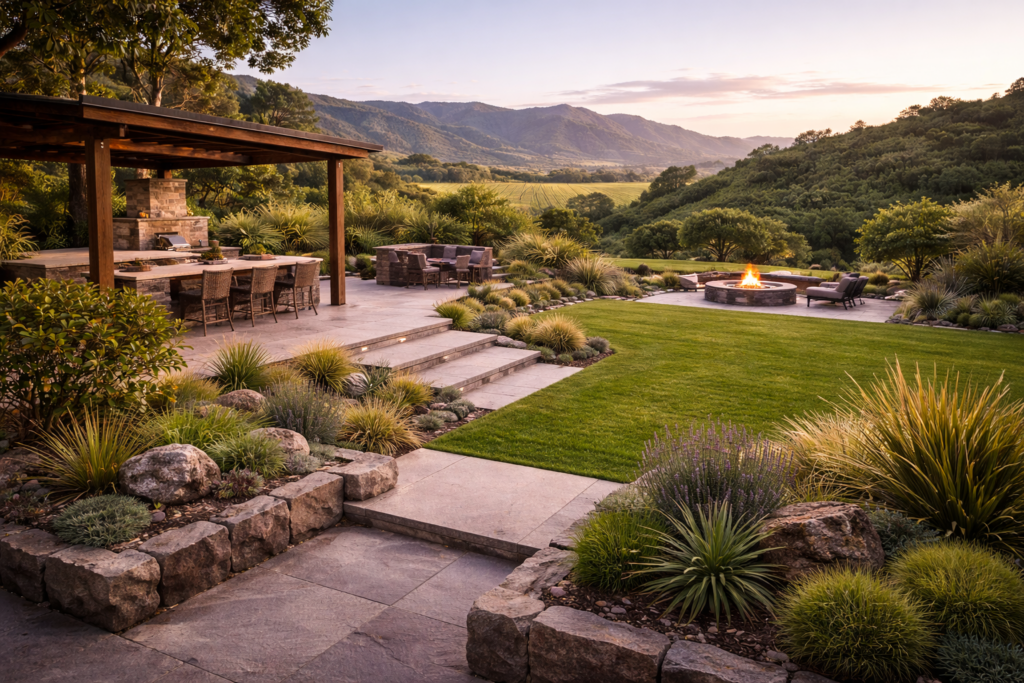
Every site has its own characteristics. Soil type, slope, exposure, and water movement all affect how a landscape performs.
A common mistake is assuming land will behave consistently across a property. Small changes in elevation or soil composition can lead to drainage problems, erosion, or plant failure if they are not addressed early.
According to research shared by the National Institute of Water and Atmospheric Research, local variations in rainfall and soil moisture can significantly influence how land absorbs and sheds water over time. This makes early site assessment essential for long-term stability.
Landscapes that ignore these factors often require correction work later.
Treating Planting as Decoration
Planting is frequently chosen based on visual preference rather than suitability.
In the Wairarapa, seasonal extremes can stress plants that are not selected carefully. Some varieties thrive initially but struggle over time, leading to gaps, replacements, and uneven growth.
Good planting design considers maturity size, maintenance needs, and resilience. When planting is treated as decoration rather than structure, the landscape loses cohesion as it ages.
Overlooking Maintenance Reality
Many landscaping plans assume an ideal level of ongoing care. In reality, maintenance time varies widely between households.
Designs that require frequent pruning, cleaning, or adjustment often fall behind once the initial enthusiasm fades. This leads to spaces that feel neglected despite being well built.
Planning with maintenance in mind helps align the landscape with how much care is realistic long term. This keeps the space enjoyable instead of demanding.
Making Late Changes Under Pressure
Another common issue is making design changes late in the process.
When planning is rushed, decisions are deferred until construction is underway. These last-minute changes are usually reactive and rarely well integrated. They can disrupt drainage, layout balance, or future flexibility.
Clear planning upfront reduces the need for compromises later.
The Role of Professional Perspective
Many of these issues stem from trying to solve complex problems in isolation. Landscaping involves multiple systems working together, not just visual design.
Professional Wairarapa Landscaping Services help translate lifestyle goals into practical outdoor environments by identifying risks early and sequencing decisions properly. Experience allows potential problems to be addressed before they become visible failures.
This planning-led approach is central to how Infinite Landscapes works with clients to create outdoor spaces that perform consistently over time.
Final Thoughts
Most landscaping problems do not start in the garden. They start on paper.
When projects focus too heavily on appearance, rush early decisions, or overlook how land and people interact, the results rarely last. Thoughtful planning changes this outcome.
In the Wairarapa, successful landscapes are built on understanding, patience, and realistic decision-making. When these elements are prioritised, outdoor spaces grow into assets that improve with time rather than projects that need fixing.

